How to make water safe: step-by-step guide
⏱ 2 min read
Boiling, tablets, filters, sunlight. A guide based on official advice. The same text is in the free SurvivalZone.app and works without internet.
First
- Use the cleanest water you have: rainwater, tap water after an outage, a spring. Avoid standing water near roads, fields and factories.
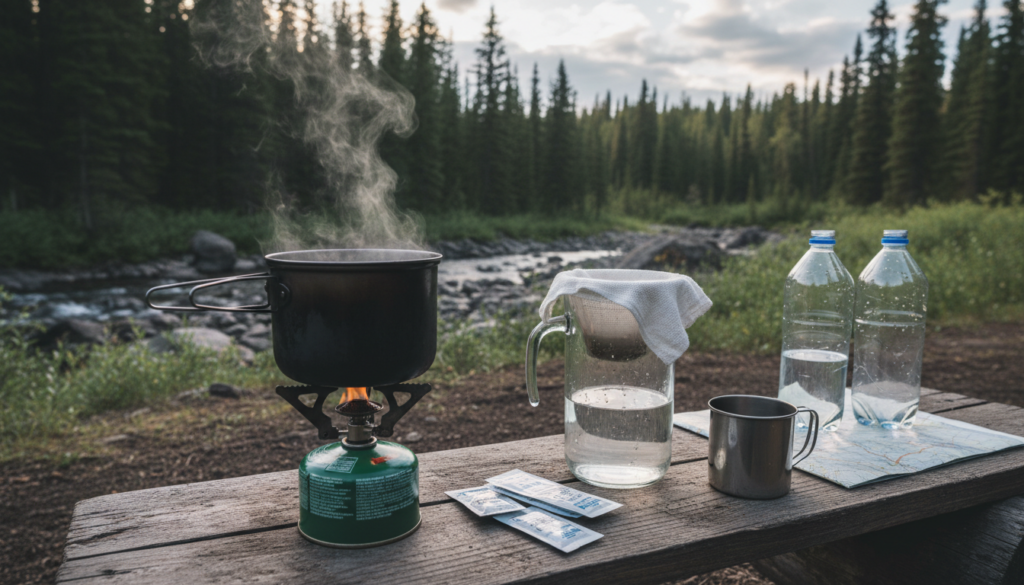
- Strain cloudy water through a clean cloth, a coffee filter or several layers of kitchen paper, then let it settle for 30 minutes.
Methods
- Boiling: bring to a rolling boil and keep it boiling for at least 1 minute. The most reliable way to kill bacteria, viruses and parasites.
- Water purification tablets: dose and wait exactly as the manufacturer says.
- Unscented household bleach, plain sodium hypochlorite (about 5–6%): 2 drops per litre, stir and wait 30 minutes. The water should smell slightly of chlorine. Double the dose if it is cloudy.
- Camping filter: removes bacteria and parasites but usually not viruses. Best combined with boiling or tablets.
- Sunlight (SODIS method): a clear PET bottle up to 2 litres, clear water, 6 hours in full sun or 2 days if cloudy.
Storage
- Keep treated water in clean, closed containers in a cool, dark place.
- Stock: 3 litres per person per day, for at least 3 days.
Watch out
- Boiling and tablets do not remove chemicals, fuel or heavy metals. Do not drink water that smells or looks like that.
- Avoid flood water, even boiled, if you have any other option.
Related topics
📩 Free 72-hour plan by email
A 72-hour shopping and go-bag list, plus a short monthly checklist. Free, no spam.
Keep it on your phone
SurvivalZone.app is a free app for every emergency, with no account and no app store. It works without internet and shows the nearest shelters and help points, local radio, a 72-hour plan and a mountain trip planner.
Thank you for reading. If this could help someone, send it to the people you care about. Getting ready takes a moment, and in a crisis every minute counts.
Coming soon: the app’s permanent address will be survivalzone.app.
Other guides
- 🍲 Food without power
- ⛺ Shelter at home and outdoors
- 👨👩👧 Protecting your family and yourself
- 💊 Run out of medicine
- 🎒 Go bag checklist
- 🩹 Home first aid kit
- 🔦 Prepare your home for a blackout
- ✈️ Air travel: a safe trip
- 🏜️ Desert trip
- 🪢 Knots worth knowing
- 🔥 Campfire and outdoor cooking
- 🧭 Survival kit for your backpack
- 📞 Family communication plan
- 🥫 Emergency food and medicine supplies
- 🧼 Hygiene in a crisis
- 📁 Documents and money in a crisis
- 🧰 Tools and equipment for a crisis
- 🧥 Clothing and warmth in a crisis
- 📻 Communication and navigation in a crisis
- 🥶 Home ready for frost
- 🌊 Prepare your home for floods
- 🔥 Fire safety at home
- 🌡️ Get ready for a heatwave
- ⛈️ Storm-proof your home
- 🚀 Shelter for an air raid
- 📢 Sirens and alerts
- ❤️ Learn CPR and find an AED
- 🌍 Prepare for earthquakes
- ⛵ Safe sailing at sea
- 🚗 Car ready for an accident
- ☠️ Carbon monoxide and gas alarms
- ❄️ Winter car kit
- 🌩️ Mountain storms: plan your hike
- 🫀 Heart attack and stroke signs
- 🏊 Water safety
- 🌲 Prevent wildfires
- 🦠 Prepare for an epidemic or pandemic
- 🧒 If your child gets lost
- 🫁 Prevent choking
- 🩸 Kit for severe bleeding
- 🔥 Prevent burns
- 😷 Smog: protect your health
- 🐻 Bears: avoid encounters
- 🐗 Wild boar: avoid encounters
- 🏢 Evacuation at work
- 🌪️ Shelter from a tornado
- 🌧️ Protect your basement from flash floods
- ☣️ Chemical incident: prepare your home
- 🏠 Quarantine at home
- 🛡️ Secure your phone and accounts
- 🔌 Your fuse box: get ready in advance
- 💨 Gas at home: a safe installation
- 😵💫 Fainting: how to prevent it
- 🏫 School and emergencies: prepare your child and family
- 🏜️ Drought: how to prepare your home and garden
- 🌋 Travelling near volcanoes: how to prepare
- 🛴 Riding an e-scooter safely
- 🛑 Attacker at school: how to prepare your child
- 🔔 Smoke and CO alarms: a home ready for the alarm
- 🔥 Campfire: types and ways to light one
Sources
- BBK guide "Vorsorgen für Krisen und Katastrophen" (Germany)
- Polish government safety guide (MON, MSWiA, RCB, 2025)
- WHO: water, sanitation and hygiene in emergencies
Scientific literature and guidelines
- Cochrane review (Clasen et al., 2015): interventions to improve water quality for preventing diarrhoea
- US EPA: emergency disinfection of drinking water
- WHO: Guidelines for drinking-water quality, 4th edition with first and second addenda
Official sources are checked automatically every day. Last check: 2026-11-08.
General guidance only; it does not replace the emergency services. If a life is in danger, call 112.
© 2026 SurvivalZone.EU. Copying this content without permission is prohibited. When quoting, credit the source and link back.